
NATURAL WONDERS OF HAWAII: 10 ISLAND LANDSCAPES WORTH PLANNING AROUND
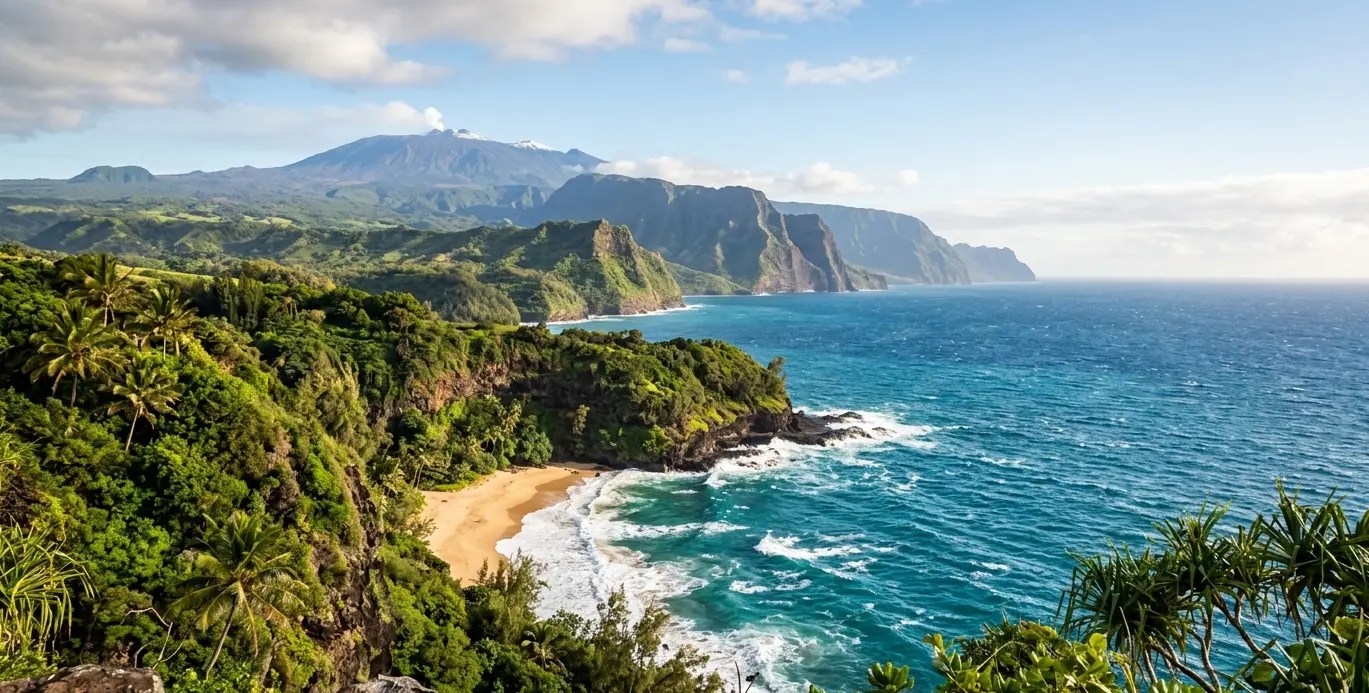
Hawaii doesn’t do things slowly. The landscape announces itself immediately and keeps delivering.
Most come intending to visit the beaches and leave totally awestruck. Standing on cliffs, craters, and out-of-the-blue waterfalls along a coastal road, on ground that didn’t exist a few decades ago. The islands’ wonders are their natural beauty and scenic attractions. They are the main reason many travelers visit.
There are a number of reasons why these famous natural wonders of Hawaii (USA) are unique.
What Makes Hawaii’s Natural Wonders Unique
Hawaii has everything to appeal to the eye and offer lasting experiences. Here’s what makes it wonderful:
Volcanic Origins
Each island in the chain has formed over an individual hotspot beneath the Pacific plate. Islands formed above the plate as it slowly moved northwest over millions of years, becoming older as they eroded. The Big Island is directly over that hotspot right now. It’s still growing. The lava, flowing onto the sea, is forming new land as it goes.
Kauai, the oldest of the main islands, was created by the same hotspot several million years ago. It is that time that gives it its distinctive look. The spectacular valleys, the sea cliffs, the deeply weathered coastlines. The volcanic origin of the islands explains nearly everything about what makes Hawaii’s natural environments so distinctive.
Ocean and Rainfall
Trade winds hit the northeastern sides of each island and bring heavy rainfall. The windward sides are lush, green, and wet. The leeward sides stay dry. A single island can shift from tropical lush rainforests to near-desert within a short drive, which is part of why island-hopping produces such different experiences even within the same territory.
That rainfall feeds the waterfalls. It carves the valleys. It explains why the road to Hana looks different from the drive to Kihei, twenty miles away.
Top 10 Natural Wonders of Hawaii Across All Islands
Planning to travel to Hawaii? The following 10 famous natural wonders are all worth visiting.
1. Nā Pali Coast, Kauaʻi
The Nā Pali Coast stretches roughly 17 miles along Kauai’s northwest shore and has no road access. The Na Pali Coast is located on Kauai’s northwest shore and can only be accessed by foot via the Kalalau Trail, by kayak during the summer (when the sea is calm enough), or by boat or helicopter year-round. Sea cliffs plunging up to 4000 feet stand straight out of the sea, forming deep valleys that lead to the Pacific Ocean. Most people view it from a boat or a helicopter.
2. Waimea Canyon, Kauaʻi
Nobody expects such a view. A canyon 14 miles long and more than 3,600 feet deep on a tropical island, whose colors range from a deep red to purple to green, according to the light and the clouds. Mark Twain called it the Grand Canyon of the Pacific, and the name stuck for good reason.
The canyon road has several lookout points that offer different perspectives on the same dramatic landscape. Visit early to beat the clouds and close-off views.
3. Haleakalā Crater, Maui
The summit is about 10,000 feet, and the floor of the crater is approximately 19 square miles. Seeing this tropical coastline from the rim and looking down at a cinder landscape is mesmerizing, a totally exceptional experience.
One of the most popular activities in Hawaii is watching the sunrise at Haleakala. Permit sales start weeks in advance and must be purchased in advance. The walk down to the crater is enough to see the endemic silversword plants found only here on Earth.
4. Hāna Coast Waterfalls, Maui
The Road to Hana is a 64-mile winding coastal road lined with bamboo forests, lush rainforests, lava sea arches, and cliffs above the Pacific. The waterfalls along it, Twin Falls, Wailua Falls, and the pools near Oheo Gulch are close to the road and can be reached without extreme hiking.
This natural beauty rewards a slow pace and an early start before the road gets congested.
5. Hawaii Volcanoes National Park, Hawaii Island
The only active volcanoes visible up close in the United States are here at Hawaii Volcanoes National Park. Since 1983, Kilauea in Hawaii Volcanoes National Park has been erupting nearly continuously. It encompasses more than 330,000 acres that contain the caldera of the summit, systems of lava tubes, black sand beaches formed by recent flows, and Holei Sea Arch, where the new coastline meets the open ocean.
The scenery changes frequently. Your experience may change with every visit. As the lava reaches the water, new ground is being added to the island. One of the rare wonders of nature in Hawaii is still ongoing.
6. Mauna Kea, Hawaiʻi Island
Mauna Kea is the highest mountain on Earth when measured from its base on the ocean. At its elevation of 13,796 feet above sea level, and about 40 percent above the world’s atmosphere, the summit is home to some of the world’s most significant observatories.
A night on the summit, clear skies, and the stars is an experience that’s too difficult to describe in advance. It is important that visitors become familiar with it at the visitor center environment before heading up. Conditions get cold quickly, and altitude sickness is a reality, even for those who feel well at the base.
7. Hanauma Bay, Oʻahu
Breached by a volcanic crater, Hanauma Bay is filled with seawater, resulting in one of the most extensive reef ecosystems in the islands. More than 300 fish species swim here. The reef is now managed more strictly, and there are limits on the number of visitors allowed each day, though it is still known as the “hole in the wall” because it still seems to be in the process of recovery.
Despite its fame, it’s still pretty awesome and the easiest snorkeling spot on Oahu.
8. Diamond Head, Oʻahu
The 16-mile round-trip summit trail rises approximately 560 ft. and passes through an historic military tunnel before leveling off at the crater rim, offering a panoramic view of the southern shore of Oahu. Getting there early is important because it is one of the most hiked trails in Hawaii. The experience is quite different before 7 am than it is during the day.
This crater was formed by a single explosive eruption some 300,000 years ago. The benign-looking line marking Waikiki looks very different up close.
9. Molokaʻi Sea Cliffs, Molokaʻi
The world’s highest sea cliffs are over 3900 feet high on Molokai’s north shore. They can be found very infrequently by land and have been preserved almost in their natural state. The western harbor offers the best views from a boat ride. Looking up at those vertical green walls from the water is one of the more humbling experiences available anywhere in Hawaii.
Molokai is the least developed of the main islands. Visiting it requires a different mindset than Maui or Oahu, and that’s exactly what makes it worth it.
10. Puʻu Pehe, Lānaʻi
Puu Pehe is an 80-foot basalt sea stack that can be reached by a short 30-minute hike off of Hulopoe Beach in the south of Lanai. Views from the overlook include the rock, the channel between Lanai and Maui, and water of varying colors depending on the depth. It is one of the numerous hiking trails available in the area.
Lanai is small and quiet with limited tourist infrastructure. That scarcity is the attraction.
How to Choose Which Hawaii Natural Wonders to Visit
Not every hour, day, or season is perfect for visiting these famous Hawaii natural wonders. Listed below is the best time to visit. This way, you can make the most of your journey here.
Time by Island
Most visitors do one or two islands per trip. A minimum of 4-5 days is required to properly experience the highlights of Kauai and the Big Island. Oahu and Maui are easier to club together. Molokai and Lanai are for those who prefer less touristy, more relaxed experiences.
The quickest, most hurried trips to collect experiences are not the best ones. The natural wonders are Hawaii’s gifts to patience, not planning.
Activity Level
There are some of the most spectacular landscapes here, and they will require some physical effort. The Kalalau Trail is one of the numerous hiking trails. It is 11 miles long and is a fairly difficult hike both ways. Adjustment to heights is necessary at the summit of Mauna Kea. Helicopter tours are available for the Na Pali Coast, Waimea Canyon, and the Big Island lava fields for a lower impact. The Molokai cliffs are accessible by boat tour. The Road to Hana and Crater Rim Drive offer a natural spectacle through the automobile.
Travel Style
Travelers who choose depth over breadth consistently leave more satisfied. Three days on Kauai in the Canyon and along the coast is better than heading to Maui as a quick day trip. In general, one big natural landmark a day, with some time thrown in, evokes more memories than a checklist itinerary.
How to Visit Natural Wonders of Hawaii Responsibly
Visiting Hawaii natural wonders is all fun, only until you remain cautious and carry out your adventure responsibly. One wrong move can simply convert the fun adventure into a nightmare.
Stay on Trails
Hawaii is home to the most endemic species, lush rainforests, and so much more than any other place in the world, but it has the highest species extinction rate. Decade-old plants can suffer from a single cut across a marked trail. This is especially important on popular roads, where the need to be economical is always present.
Protect the Reef
Reef-safe sunscreen, no contact with coral or marine life, and controlled buoyancy while snorkeling all reduce damage to ecosystems that are already under significant pressure from warming ocean temperatures. Hanauma Bay’s partial recovery happened specifically because of visitor education and managed access. The same practices applied everywhere else in Hawaii make a real difference.
Respect Sacred Places
Mauna Kea is considered the most sacred mountain in Hawaiian tradition. There are areas along the coast and inland valleys that have particular cultural significance, but this is not indicated on the trail map. Responsible travel in Hawaii means appreciating these spaces for what they are, not how they look.
Frequently Asked Questions
What is the most famous natural wonder in Hawaii?
Hawaii Volcanoes National Park comes up most often, partly because it offers active geological processes visible nowhere else in the United States. Haleakala and the Na Pali Coast are close behind, depending on who’s answering.
Which Hawaiian island has the best natural wonders?
Kauai has the most awesome scenery per square mile. The Big Island has the greatest variety of geology. A balance of accessibility and real showmanship is struck at Maui. There’s no simple answer here since each island has its own unique thing going on.
Can you see Hawaii’s natural wonders without hiking?
Most of them, yes. The helicopter tours include rides to the Na Pali, Waimea Canyon, Haleakala, and Big Island lava fields. The Molokai cliffs are accessible by boat tour. The road to Hana and the Crater Rim Drive are both noteworthy natural drives that can be enjoyed entirely by vehicle.
What natural wonders can you visit on Oʻahu?
The most accessible are Diamond Head and Hanauma Bay. Nuuanu Pali Lookout has sweeping views along the windward coast, including some spectacular vistas. Oahu is the most developed of these islands, although it still retains some authentic Hawaiian character, especially on the northeast side.
How many islands should I visit on a Hawaii nature trip?
Two islands work well for a ten-day trip. Three is possible with twelve or more days and efficient inter-island connections. The natural wonders of Hawaii reward slow movement. Seeing two islands properly is almost always better than rushing through four.