
TOP THINGS TO DO IN HAWAIʻI VOLCANOES NATIONAL PARK
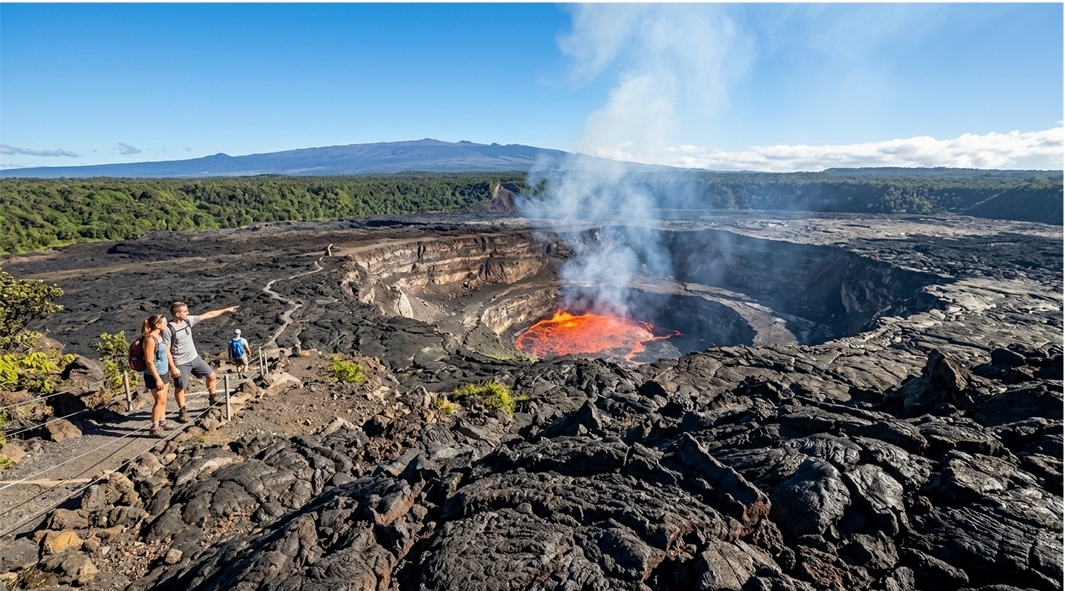
Exploring the Hawaii Volcanoes National Park is like stepping into the unbelievable. Fire and time shape the landscape, and some spots even look otherworldly.
It is home to active volcanoes, dramatic craters, lush rainforests, and ancient lava fields. If you are visiting the Hawaii Volcanoes National Park, here is a list of top things you must do.
Crater Rim Trail Experience
The Crater Rim Trail in Hawaii Volcano National Park offers a scenic journey to the Kīlauea caldera, which is a testament to the 2018 eruption. It has dramatic volcanic views with sections of lush green rainforest. Here visitors will witness steam vents, crater overlooks, and evolving landscapes shaped by the ongoing volcanic activities.
Kīlauea Iki Trail
The Kīlauea Iki Trail descends through the dense rainforest into a solidified lava lake. The contrast between greenery and the barren crater floor creates a striking, otherworldly hiking experience.
The total length of the trail is approximately a 3.3- to 4-mile loop and will take around 2 to 3 hours to complete. Now, coming to the difficulty, it is moderate to challenging because of the steep and uneven terrain.
Crater Rim Drive
Crater Rim Drive is a scenic route that circles the summit area, connecting many of the park’s key attractions. Ideal for visitors who prefer a relaxed exploration, the drive features multiple lookout points where you can safely admire volcanic craters, steam vents, and dramatic landscapes. You will also find cute picnic areas and walking trails on the way, which is great to grab a quick bite.
Explore Active Volcano Views
Experiencing the active Hawaii National Park’s volcano views will be an unforgettable part of your visit. These massive active volcano views are centered around the Kilauea Volcano and offer a rare chance to witness the raw power of the Earth as it continuously reshapes the landscape through eruptions, steam vents, and red-hot glowing lava.
Halemaʻumaʻu Crater
Halemaʻumaʻu Crater is an active volcano crater located within the Kīlauea caldera. It is one of the most popular spots to observe volcanic activity. Depending on current conditions, you may see rising volcanic gases, steaming vents, or even molten lava glowing within the crater, which looks even more striking after the sunset. This national park’s Hawaii volcano site offers a one-of-a-kind experience.
The crater also has a cultural significance. It is popularly regarded as the home of the fire goddess Pele and considered sacred.
Kīlauea Visitor Center
Kīlauea Visitor Center in Hawaii Volcanoes National Park is the perfect starting point for your adventure. Located near the summit of Kilauea Volcano, it offers essential information, educational exhibits, and up-to-date safety alerts that help you explore the park confidently. Note: It is temporarily closed for two years starting 17th February 2025 due to renovation.
Experience Lava Tube Adventures
The lava tube adventures feel like stepping into the hidden pathways of an ancient volcano. These tubes are formed by flowing lava that cooled and hardened on the outside. They offer a fascinating glimpse into the island’s volcanic past and natural formations and are suitable for visiting all year round.
Nāhuku (Thurston Lava Tube)
Nāhuku, or the Thurston Lava Tube, is the most popular lava tube in the park. It is a 500-year-old lava tube that is almost 600 feet long. Although exploring the entire tube is impossible, there is a short, accessible loop trail of approximately 0.4 miles. It offers a well-lit walking path and often has plenty of tourists.
Surrounded by dense rainforest at the entrance, the experience transitions from lush greenery to a cool cave with dripping walls and echoing sounds.
Devastation Trail
These Volcano National Parks, Hawaii, offer a powerful look at how volcanic eruptions can completely transform a land. The trail was formed after the 1959 eruption of the Kīlauea Iki crater and is easily accessible. As you walk through the volcanic aftermath, you will witness vast expanses of black lava rock and cinder. The terrain tells the story of how intense eruptions reshaped the area in a matter of days.
Scenic Overlooks and Coastal Views
The scenic overlooks and coastal views in Hawaii Volcanoes National Park service offer a stunning view of the vast Pacific Ocean. These views contrast the volcanic landscapes but make you realize how different things can coexist besides one another.
Holei Sea Arch
Holei Sea Arch is a 90-foot natural arch located on the southern coast of the Big Island. Waves crashing against the black lava cliff create a striking sight, letting you immerse yourself in the coastal beauty.
The rock formation was created by marine erosion, and the waves of the Pacific Ocean created a natural bridge.
Mauna Loa Scenic Area
The Mauna Loa Scenic Area offers a chance to experience the immense scale of Mauna Loa Volcano, which is the largest volcano by volume on Earth. This region has vast lava fields, open skies, and rugged beauty that feels powerful.
Wildlife and Cultural Experiences
Beyond the volcanic landscapes, Hawaii Volcanoes National Park offers unique cultural and wildlife experiences that are rare and distinctive. This unique environment is home to some rare species and holds spiritual and historical significance in Hawaiian culture.
Puʻuloa Petroglyphs Trail
Visit Puʻuloa Petroglyphs Trail to see thousands of ancient Hawaiian carvings etched into hardened lava. These petroglyphs tell stories of births, journeys, and cultural traditions and offer a powerful connection to the island’s past.
Hawaiʻi Volcanoes National Park Kahuku Unit
Kahuku Unit is a pastoral landscape that offers an entirely different experience from the main park area. It is located on the southern slopes of Mauna Loa Volcano and offers a sweeping view of the ocean.
This area is also known for its peaceful and less crowded hiking trails that take you through open grasslands, old lava flows, and forested areas, offering a quiet and relaxed way to explore the park.
Plan Your Visit to Hawaiʻi Volcanoes National Park
Planning a trip to Hawaii Volcanoes National Park service lets you experience the diversity of the island. Here is how you can plan a comfortable trip:
- Check Real-Time Updates: Before entering the national park, check real-time updates at the Kilauea Visitor Center for volcanic activities, weather, and trail conditions. The conditions can change quickly, so by checking for real-time updates, you can rest assured that you have a safe experience.
- Decide How Much Time You Have: Exploring all the iconic spots inside the national park may not be possible in a few hours. A one-day visit can cover highlights such as the Crater Rim Drive, lava tubes, and key view points. A two-day trip will give you the time to explore hiking trails such as Kilauea Iki and quieter areas like the Kahuku Unit.
- Plan Your Spots in Advance: Deciding on the spots that you want to visit in advance will help you avoid confusion once you are inside the national park. Consider your top interests, like scenic drives, short trails, or viewpoints, and plan your trip accordingly.
- Pack Essentials: The essentials include water, snacks, sunscreen, sturdy shoes, and a light jacket. Since facilities are limited in some areas, preparing helps ensure a smoother experience.
- Start Early: Opting to start your trip early in the morning will help you avoid crowds and enjoy the entire experience. However, if you are going for the iconic lava view, stay until sunset. The glowing lava and the sunset will make your experience memorable.
Frequently Asked Questions
What is the best time to visit Hawaiʻi Volcanoes National Park?
The park is open year-round, but the best time to visit is during the dry season from April to October. Early mornings and evenings offer cooler temperatures, fewer crowds, and better chances to witness volcanic glow or enjoy the views comfortably.
Is Hawaiʻi Volcanoes National Park safe for tourists?
Yes, Hawaii Volcanoes National Park is safe for tourists as long as you follow the park guidelines. Always stay on marked trails, respect closures, and check real-time updates at the Kilauea Visitor Center, as volcanic activity and conditions can change quickly.
Is there an entry fee to visit Hawaiʻi Volcanoes National Park?
Yes, there is an entry fee for the Hawaii Volcanoes National Park. It costs $30 per vehicle, $25 per motorcycle, and $15 for pedestrians and bicycles. The park is open 24/7, and you must pay the fee at the entrance. Credit and debit cards are accepted for payment.
Can you see active lava in Hawaiʻi Volcanoes National Park?
Yes, you can often see active lava from the Kīlauea volcano in Hawaiʻi Volcanoes National Park. Moreover, if you go during the evening, you may see the lava glowing in the dark. But remember that spotting active lava highly depends on the current volcanic activity.
What should you wear when visiting Hawaiʻi Volcanoes National Park?
When visiting the Hawaii Volcanoes National Park, dressing appropriately is important. Wear comfortable, sturdy walking or hiking shoes, as lava rocks are sharp and uneven. Choose lightweight, breathable clothing for daytime, but carry a light jacket as temperatures may drop.