
WILDLIFE IN HAWAII: WHAT YOU’RE MOST LIKELY TO SEE ON YOUR TRIP
Hawaii is one of those places that genuinely surprises you. The beaches are beautiful, the food is incredible, and the culture runs deep, but the wildlife in Hawaii is something else entirely. It has a wide range of ancient sea turtles gliding through crystal-clear water and rare forest birds singing in the misty mountain valleys. In fact, the Hawaiian islands are home to some of the most extraordinary wild animals in the world.
Many of these species exist nowhere else on the earth, which makes spotting them on your trip feel genuinely special. So, whether you are snorkeling in Oahu, hiking Maui’s trails, or exploring the Big Island’s volcanic coastline, Hawaii’s wildlife has a way of turning a great holiday into an unforgettable one.
Common Hawaii Wildlife You Can See on Your Trip
Not all wildlife in Hawaii requires a special expedition to spot. Some of the most iconic creatures show up on beaches, in bays, and just offshore, right where most visitors spend their time.
Hawaiian Green Sea Turtles (Honu)
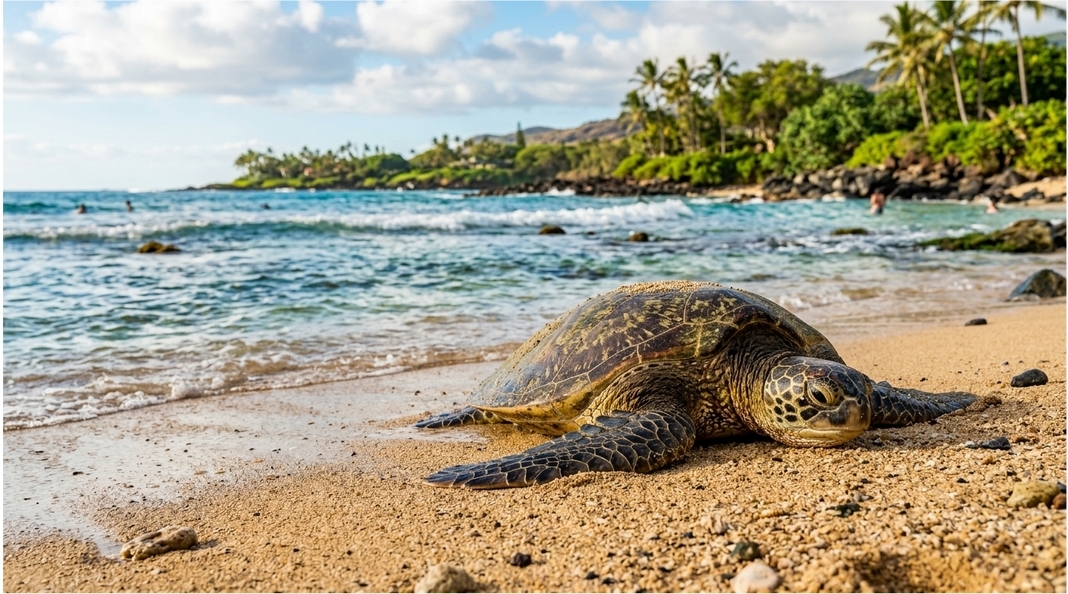
The Hawaiian green sea turtle, known locally as the honu, is one of the most beloved symbols of the Hawaiian islands. You can spot them baking on beaches or gracefully gliding near reef areas, particularly along the Big Island’s Punaluu Black Sand Beach and Oahu’s North Shore. Hawaiian green sea turtles are protected under federal law, and seeing one in the wild unhurried and completely at ease is one of those moments that stays with you long after the trip.
Hawaiian Monk Seals
Hawaiian monk seals are among the native land mammals in the world. These gentle creatures are endemic to the Hawaiian Islands and are often spotted resting on remote, sandy beaches, particularly across the northwestern Hawaiian Islands chain. They tend to keep to themselves and spend long periods hauled out on shore between feeding dives. If you are lucky enough to see one, give it plenty of space because it is likely there to rest, and disturbing it does real harm.
Spinner Dolphins
Spinner dolphins are a regular and lively sight around many of Hawaii’s coastal areas. They travel in pods and are known for their acrobatic leaps and spins above the waterline. Hulopoe Bay on Lanai is one of the most well-known spots to encounter them in a calm, protected marine reserve setting. Watching a pod ride a boat’s bow wave or leap in unison at sunrise is the kind of experience that reminds you how alive the ocean really is.
Reef Fish and Coral Species
Hawaii’s shallow reef systems are packed with vivid marine life. Parrotfish, triggerfish, moorish idols, humuhumunukunukuapua’a (Hawaii’s state fish), and countless other species dart through the coral at popular snorkeling spots like Hanuman Bay on Oahu and Molokini Crater off Maui. The coral itself is part of a delicate, living ecosystem, colorful, complex, and well worth protecting.
Native Hawaiian Birds and Forest Wildlife Species
Hawaii’s native wildlife extends well beyond the coast. The islands’ forest and mountain interiors are home to remarkable bird species found nowhere else on earth, many of which are deeply threatened and carefully protected.
Nēnē (Hawaiian Goose)
The nēnē is Hawaii’s official state bird and one of the rarest geese in the world. Unlike most geese, it has adapted to volcanic terrain with reduced webbing on its feet, helping it navigate rough lava fields. You can spot nēnē at Haleakalā National Park on Maui and Hawaii Volcanoes National Park on the Big Island. After coming close to extinction, conservation efforts have helped the nēnē recover, though it remains a protected species.
ʻIʻiwi and Other Honeycreeper Birds
The ʻiʻiwi is one of Hawaii’s most striking native birds, which is bright scarlet with a curved, salmon-colored bill perfectly designed for feeding on native flowers. Along with other Hawaiian honeycreepers, the ʻiʻiwi is most commonly found in high-elevation native forests, particularly on Kauai and the Big Island. These birds are especially vulnerable to avian disease, which is why protecting native forest habitat matters so much to the overall health of Hawaii wildlife.
Hawaiian Hawk (ʻIo)
The ‘io, or Hawaiian hawk, is the only hawk native to the Hawaiian islands and can be found primarily on the Big Island. It’s a small but powerful bird of prey. They are often spotted soaring over forests and farmland in the Kona and Hilo areas. The ‘io holds a special place in Hawaiian culture as a symbol of royalty, and seeing one circle overhead on a hiking trail is a genuinely memorable moment.
Forest Insects and Endemic Species
Hawaii’s forests are also home to a remarkable range of endemic insects, including native beetles, moths, and spiders that have evolved in isolation over millions of years. While less visible than birds or marine life, these insects form a critical part of Hawaii’s ecosystem. When you stay on marked trails and avoid disturbing leaf litter or native plants, you are helping these lesser-known but equally important members of Hawaii wildlife.
Marine Wildlife in Hawaii’s Waters and Reefs
Below the surface, Hawaii’s ocean teems with life. The warm, clear Pacific waters surrounding the islands of Hawaiian support some of the most biodiverse marine environments in the northern Pacific.
Humpback Whales (Seasonal Visitors)
Every year from roughly November through May, humpback whales migrate from Alaskan feeding grounds to the warm, shallow waters of Maui’s Auau Channel to breed and give birth. This is one of the largest seasonal gatherings of humpback whales in the world. Watching a 4.5 ton whale breach from the surface or hearing their song underwater while snorkeling is an unforgettable experience. During winter visits to Haleakalā National Park on Maui, it’s even possible to spot humpback whale activity from high-altitude viewpoints out over the ocean.
Manta Rays at Night
The Big Island’s Kona coast is internationally famous for its night manta ray dives and snorkels. Manta rays, some with wingspans reaching 15 feet, gather near shallow bays after dark to feed on plankton drawn to the light. It’s a surreal experience watching these enormous, graceful wild animals silently glide through the water just inches below you.
Sea Turtles Along the Shorelines
Marine turtles appear throughout the Hawaiian islands, not just in the water but on the beaches themselves. Green sea turtles regularly come ashore to bask and rest, especially on the Big Island’s black sand beaches and along Oahu’s North Shore. You are likely to encounter them whether you are swimming, snorkeling, or simply walking the shoreline.
Tropical Reef Ecosystems
Hawaii’s coral reefs support hundreds of fish species, invertebrates, and marine plants. The reef systems at Hanuma Bay Nature Preserve on Oahu are particularly well-protected and teeming with life, making it one of the best snorkeling spots in the state for getting up close with tropical reef ecosystems in a responsible setting.
Best Places to See Wildlife in Hawaii
If you want to experience Hawaii at its best, it is very important to visit the best places where you can watch the wildlife of Hawaii in its full glory. The place has some islands that are better for marine encounters, others for native birds and forest hikes, and a few offer a genuine mix of both.
Knowing where to go makes the real difference. Here’s a breakdown of the best types of locations and the specific spots within them that give you the highest chance of meaningful wildlife encounters.
Beaches and Coastal Areas
Punalulu Black Sand Beach on the Big Island is the most preferred spot for green sea turtles. Hulopoe Bay on Lanai attracts spinner dolphins. Poipu Beach on Kauai is known for monk seal sightings. The North Shore of Oahu attracts pelagic seabirds and marine turtles year-round.
National Parks and Protected Reserves
Hawaii Volcanoes National Park and Haleakalā National Park are the two most important protected areas for native Hawaiian wildlife, which include the nēnē, the ‘io, and a range of native forest birds. Kalaupapa National Historic Park on Molokai also sits within one of the most ecologically intact coastal landscapes in the state.
Rainforests and Hiking Trails
Oahu’s interior trails, including those in the Ko’olau Range, pass through habitat where native birds are still active. If you head out early in the morning, before the heat sets in and the crowds arrive, you get yourself the best chance of hearing and spotting native forest species. Staying on marked trails protects both you and the surrounding ecosystem.
Marine Sanctuaries and Snorkeling Spots
Hanuma Bay on Oahu, Molokini Crater off Maui, and Kealakekua Bay on the Big Island are among the finest marine snorkeling environments in the Hawaiian Islands. These protected waters give visitors close, safe encounters with sea turtles, reef fish, and coral ecosystems.
Tips for Spotting Hawaii Wildlife Safely
Wildlife Hawaii is one of the most rewarding experiences of any visit to the islands, but doing it responsibly is as important as the experience itself. Hawaii’s native wildlife is fragile, protected, and irreplaceable. Following a few simple guidelines ensures that both you and the animals stay safe.
Keep a Respectful Distance from Wildlife
The most important thing to remember as a visitor is to observe wildlife on Hawaii from a distance. Federal regulations require people to stay at least 50 feet from sea turtles and Hawaiian monk seals and at least 100 yards from whales. Getting too close causes stress, disrupts natural behaviors, and in some cases poses real danger. Let the wildlife come to you.
Follow Local Wildlife Protection Rules
Hawaii’s native wildlife is protected under both state and federal law. Signage at beaches, parks, and marine reserves outlines the rules clearly. Read them, follow them, and remind others in your group to do the same.
Do Not Feed or Touch Animals
Feeding wild animals disrupts their natural diet, encourages dangerous proximity to humans, and can cause long-term harm to individual animals and populations. This applies to fish, turtles, dolphins, monk seals, and birds alike. Touching animals, even calm ones, causes unnecessary stress and can injure both the animal and you.
Stay on Marked Trails and Paths
Whether you are hiking Oahu’s ridge trails or exploring coastal nature reserves, staying on marked paths protects the fragile ecosystems around you. Off-trail movements damage plant roots, disturb nesting birds, and harm insects and invertebrates that form the foundation of Hawaiian wildlife communities.
Frequently Asked Questions
What is the best time of day to see wildlife in Hawaii?
Early morning is generally the best time. Seabirds and native forest birds are most active in the first few hours after sunrise. Turtles tend to come ashore to bask mid-morning through early afternoon. For humpback whales, calm morning seas make sightings and breaches easier to spot from shore or boat.
What marine wildlife can you see while snorkeling in Hawaii?
While snorkeling in Hawaii, you can see a wide variety of wildlife like green turtles, tropical reef fish, moray eels, octopuses, eagle rays, and occasionally spinner dolphins. At spots like Hanuma Bay and Molokini Crater, the marine life is abundant and close.
Is Hawaii wildlife safe to observe up close?
Most wildlife on Hawaii is safe to observe from a respectful distance. The key is not to approach animals, block their path, or interfere with their natural behavior. Wild animals are unpredictable, and monk seals in particular can bite if approached too closely.
Are there dangerous animals in Hawaii?
No, Hawaii has no land predators and no snakes. The most significant risks come from ocean wildlife such as certain jellyfish, sea urchins, and the occasional tiger sharks. If you stick to designated swimming areas and pay attention to posted warnings, then you can be perfectly safe.
Are Hawaii’s native animals protected?
Yes. Hawaiian wildlife, including nēnē, Hawaiian monk seals, Hawaiian green sea turtles, whales, and the Hawaiian hawk, is protected under state and federal law. Disturbing, feeding, or harassing these animals carries serious penalties. Hawaii takes the conservation of its wildlife seriously, and so should every visitor who has the privilege of seeing these creatures in their natural home.