
WHAT TO WEAR ON AN ATV RIDE: FROM HEAD TO TOE EXPLAINED
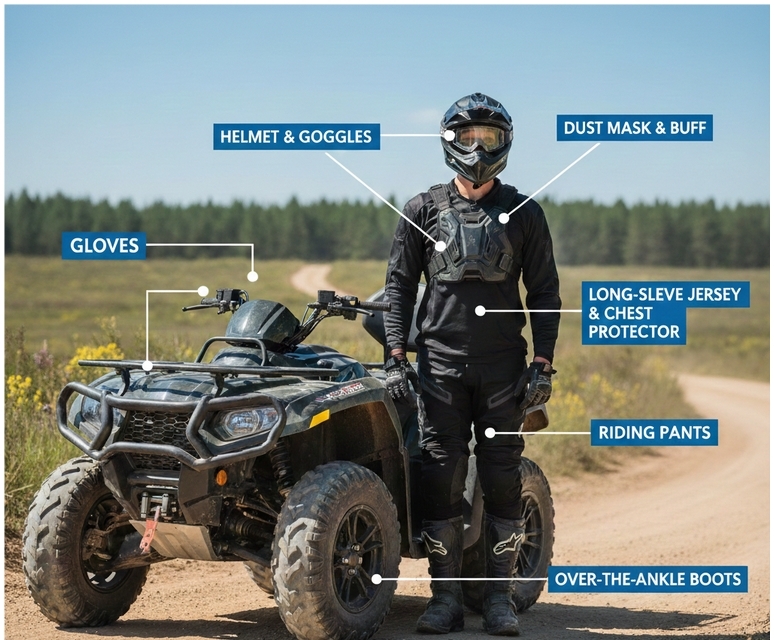
There’s no gainsaying the fact that going on an ATV tour feels wicked good! It is an absolutely thrilling way to enjoy the outdoors. If you’ve experienced this fun ride even once in your life, you know what we’re talking about: traveling zigzag down a dirt track and dust flying through the air. Exhilarating! But what you wear matters a lot. Those who are about to take their first ride especially need to know this.
The right gear keeps you safe. They also keep you comfortable for hours. So, never make the mistake of turning up for the sport unprepared, wearing clothes meant for the mall. This post will guide you through your selection of the essential clothing and accessories for an unforgettable ATV tour.
Why Proper ATV Riding Clothing Matters
When hitting the trail, you need to dress right. The trail has rocks, mud, and branches. The weather can also be capricious, so choosing the right clothes is a priority. How you feel atop the machine trumps style.
Safety First
ATV machines are heavy and go fast over bumpy ground. Your skin is soft. Small pieces of rock can fly up from the tires of your machine or of the person in front of you.
Comfortable clothes help you stay focused on your ATV riding experience. If you swish by branches, they can hit your arms. Thick layers of clothing prevent these things from hurting you.
Comfort and Performance for Long Rides
An ATV adventure can last all day, and you will be moving a lot. You will stand up on the footpegs and lean into turns. Your clothes must allow this movement. If your pants are tight, you will become sore. If your shirt is loose, the wind will make it flap.
You might even sweat because of the hard work. So, using moisture-wicking fabrics can pull sweat away from your body.
Head and Eye Protection
An ATV helmet is not optional. It is a piece of proper equipment, as it absorbs the impact of a fall and keeps your skull safe. You should never sit on an ATV without a helmet on your head. Your eyes need protection, too. A trail is dirty, and wind can blow strongly. If something gets in your eye, you won’t be able to see the trail. You need to keep your vision clear so you can react to obstacles.
ATV Helmets
There are many types of helmets for ATV riding. A full-face helmet is the safest. It covers your chin and your face. If you fall forward, your jaw is protected. This is very important for off-roading. Motocross helmets are also great. They have a long visor to block the sun and roost.
Check the fit of your helmet. It should not wiggle when you shake your head. The strap must be tight under your chin. Look for a helmet that has a safety seal. This shows it was tested for impact. A high-quality helmet will help you ride with peace of mind.
Goggles vs. Sunglasses
Sunglasses are not the best for an off-road adventure. They have gaps on the sides, so dust, wind, and debris can get behind the lenses. This makes eyes water.
Goggles have a foam seal that fits against your face and blocks out all the dust. They also have a strap that goes around your helmet, keeping them in place no matter how bumpy the trail gets. So, these are the proper gear for eye safety.
Upper Body Clothing
Your upper body needs protection from many things. The sun is a big one. You might be out in the sun for five hours. That is a lot of UV exposure! The wind is another factor. Even on a warm day, the wind can make you feel cold when blowing at high speeds.
Long‑Sleeved Shirts and Jerseys
A long-sleeved shirt keeps the sun off your arms. It also stops branches from scratching you. Many riders like specialized jerseys. These are made of light material that breathes well. They often have bright colors. This makes you easy to see on the trail.
Jackets and Chest Protection Options
A good riding jacket is windproof. It should also be tough. Some jackets are made to resist tears from thorns. Look for one with many pockets. You can keep your phone or a snack in them. Make sure you can move your shoulders freely in it.
Chest protectors are for people who want extra safety. These are hard shells that go over your chest and back. They protect your ribs from hard hits. They are also great at stopping rocks from hitting your torso. They are light and have holes for air. This is a great addition to your protective gear.
Lower Body Clothing
Your legs are very close to the engine. ATV engines generate a lot of heat. You need a thick barrier between your leg and the motor. Your legs also do a lot of work to keep you balanced. Your pants need to be tough but flexible.
Long Pants and Reinforced Riding Pants
Always wear long pants for ATV rides. Jeans are a good option, too, as they are thick and handle dirt well. However, they can be stiff. Dedicated riding pants are a better choice because they have stretch panels so you can move easily.
Riding pants also have padding around the knees. This can be especially helpful for gripping the machine with your legs.
What to Avoid (Shorts, Baggy Clothing)
Shorts can be risky on an ATV. You might accidentally touch the hot exhaust. Without pants, you could burn yourself. You also risk hitting your shins on the footrests. You must also avoid very baggy clothing. Loose fabric can get caught in the wheels, which can lead to a crash.
Gloves (Grip and Protection)
When riding an ATV, you need a sturdy grip at all times. If your hands get sweaty, they could slip. If they get cold, they will be numb. Gloves solve both of these problems.
Choosing the Right ATV Riding Gloves
Good gloves should have a padded palm. This absorbs vibration from the engine. It keeps your hands from getting tired. Look for gloves that have a secure wrist strap. You don’t want them sliding off. The fit should be snug. You need to feel the buttons and levers on the handlebars.
Some gloves have hard plastic on the knuckles. This is perfect for trail riding. It protects you from rocks and wood. Make sure the gloves are flexible. You need to be able to squeeze the brake lever quickly. Test them out before you buy them.
Breathable vs Insulated Gloves
In the summer, use breathable gloves. They have mesh on the back to let air in. This keeps your hands dry. Sweaty hands are hard to use on a throttle. In the winter, you need insulation. Cold fingers don’t move well. You need to be able to use your brakes in an emergency.
Footwear Essentials for ATV Riding
Your feet will be near the ground and the moving parts of the ATV. The footrests on an ATV have sharp teeth. These teeth help your feet stay put. If you wear soft shoes, these teeth can hurt your feet. You need a solid sole to protect yourself.
Boots and Over-Ankle Shoes
Boots are the best option for an ATV tour. They cover your ankles and provide ample support. Work boots or hiking boots work well for most people, as they have thick soles. If you are doing serious racing, get motocross boots. They are the strongest!
Why Flip-Flops and Sneakers Are Risky
Flip-flops offer no protection on an ATV. Your toes are exposed to rocks and the hot engine. They also provide no firm grip, so your foot could easily slip off the peg and get caught under the tire, resulting in a very painful injury. Likewise, sneakers are also not great. They are made of thin fabric, and a sharp rock can poke right through them.
Accessories and Extras to Wear
Small accessories can make a big difference to your overall comfort. Extras like bandanas and hydration gear are easy to carry, are cheap, and take up almost no space in your bag.
Bandanas and Neck Protection
A bandana can be worn around your neck. If the trail is dusty, pull it up over your mouth. This helps you breathe cleaner air. It also protects your throat from cold wind. In the summer, you can soak it in water to stay cool.
Neck protection also guards against the dirt kicked up by other ATVs. It can hit your neck like a small stone. A simple layer of fabric stops it from hurting.
Sunscreen, Hydration, and Trail Gear
The sun reflects off the dirt and back up at you. Apply it before you start. Reapply it halfway through the day. Don’t forget your ears and the back of your neck. You must also carry plenty of water. ATV riding is a workout. You will get thirsty. A hydration pack is a great way to drink without stopping.
Conclusion
Dressing for an ATV ride is easy if you follow this guide. Start with a helmet and goggles, throw on a long-sleeved shirt and long pants, and finish off with gloves and solid boots. This ensemble protects you from almost everything, and you will be able to focus on having a great time.
Frequently Asked Questions (FAQs)
Can I Ride an ATV in Shorts and a T-Shirt?
No; it is unsafe and can result in scrapes and impacts from rocks and branches, as well as sunburn.
What Type of Helmet Is Best for ATV Riding?
A full-face off-road helmet like a motocross helmet is the top choice, as it provides protection for your entire head.
Are Sunglasses Enough for Eye Protection While Riding an ATV?
No, sunglasses let in wind, dust, mud, or debris from the sides. Goggles, on the other hand, are sealed.
Can I Ride an ATV in the Rain?
Yes, but with extra caution. Wear proper gear like waterproof boots and a rain jacket.
What Clothing Materials Are Best for ATV Riding?
Moisture-wicking fabrics like polyester are best for ATV riding, as they dry fast and keep you comfortable.