
WHAT IS THE DIFFERENCE BETWEEN A QUAD AND A UTV?
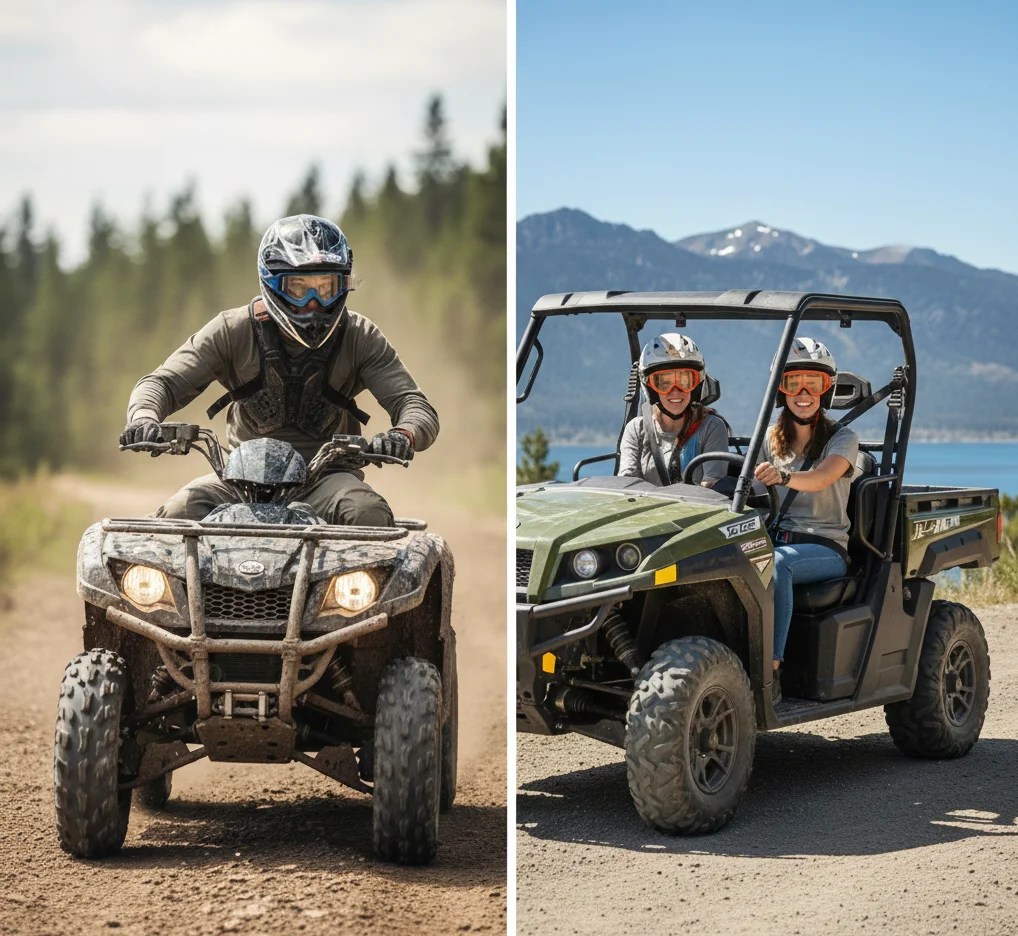
Off-roading is a favorite pastime for many riders, and it might be yours, too. If you are looking for an off-road vehicle or need help managing tasks on your farm, two options stand out: quad bikes, which are all-terrain vehicles (ATVs) and utility task vehicles (UTVs).
Both quad bikes and UTVs offer excellent performance and are suitable for long-term use. However, if you are confused about which vehicle would be best suited for you and have wrestled with the question, “What is the difference between a Quad and a UTV?,” this guide is for you.
Understanding the Basics: What Are Quads and UTVs?
Before talking about the differences, let’s take a closer look at both vehicles and their uses.
What Is a Quad Bike?
Quads are specifically designed for a range of outdoor environments. Best suited for a single rider, quad bikes feature a handlebar steering system resembling that of a motorcycle. These sturdy four-wheelers are ideal for recreational use, especially on rough and uneven terrain.
What Is a UTV?
Featuring side-by-side seating, UTVs are ideal if there is more than one rider. Equipped with steering wheels, pedals, and powerful engines, these vehicles can be used for both work and recreation.
The Core Purpose of Each Vehicle Type
Both Quads and UTVs are used for a variety of reasons. These include:
- Quad: Agriculture, emergency services, snow plowing, hunting, and camping
- UTV: Agriculture, livestock management, hunting, military evacuations, and mining
Key Differences Between a Quad and a UTV
From seating capacity to driving style, quads and UTVs differ in a number of ways. Here are a few aspects to consider before deciding which vehicle is best for you.
Design and Seating
Quads are smaller than UTVs and have an open frame. The seating is straddle-style, meaning the rider sits astride the vehicle. The lightweight frame makes quads highly maneuverable, even in challenging environments. Owing to their compact build, drives can easily navigate sharp turns, steep climbs, and narrow passageways with precision.
UTVs have a larger, enclosed or semi-enclosed frame. They feature side-by-side bench seats. Depending on your needs, you can add features such as windshields, roof covers, and extra storage to your vehicle. Compared to quads, UTVs feel more comfortable and secure.
Controls and Handling
Quads are controlled using handlebars, thumb throttles, and hand brakes. Drivers must shift their weight to maintain balance and control of the vehicle.
UTVs come with a steering wheel, gas and brake pedals, and dashboard controls. The steering of UTVs closely resembles that of cars, which makes these vehicles more beginner-friendly.
Passenger Capacity
While most quads seat only one rider, some allow a second passenger to sit behind the driver. UTVs, on the other hand, can accommodate 2 to 6 passengers, all of whom must sit upright and secure with seatbelts.
Safety Features
The open seating and exposed rider position of quads make protective gear a must. Since quads do not come with enclosures or seatbelts, riders must also be careful about potential rollovers.
UTVs are equipped with multiple built-in safety features, making them a popular choice for families. Unlike quad bikes, they typically come with seatbelts, roll cages, and partially enclosed cabins, which provide a more secure riding environment. Certain models also feature reinforced frames and windshields for added protection.
Storage and Utility Options
Most quads offer compact front and rear racks for carrying limited, preferably lightweight, items. While these are not designed for heavy-duty transportation, you can easily carry a backpack, a cooler, or a few utility tools. Some quad bikes, however, can tow small trailers and have more extensive use cases.
UTVs generally feature a spacious rear bed (also known as a dump bed) for carrying tools, supplies, and work materials. Additionally, they come with extra storage compartments in convenient spots, such as under the seats and on the roof. Many UTVs can also haul heavier loads and tow trailers or equipment.
Terrain Capabilities
Due to their light, compact build, quads can navigate narrow paths, dense bushes, and tight off-road trails where larger vehicles might struggle. Their ground pressure is relatively low, which makes them less likely to get bogged down while traveling through softer surfaces like mud and snow.
UTVs are characterized by a wider wheelbase and lower center of gravity, which makes them stable on rough and uneven terrain. They are better suited for challenging conditions like deep mud, creeks, water crossings, and rocky inclines.
Pros and Cons of Quads and UTVs
To further facilitate your selection, here is a snapshot of the pros and cons of both vehicles.
Advantages of Quads
Quads are compact, agile, and perfect for navigating narrow, tight spaces. Their controls are ideal for riders who enjoy exploring various terrains on their own.
Compared to UTVs, quads are a lot more budget-friendly. They are great for beginners or recreational drivers seeking to dip their toes into off-roading while staying under budget. Finally, owing to their small size, quads are easier to transport.
Advantages of UTVs
UTVs are exceptionally versatile. Unlike quad bikes, they can seat multiple riders and are ideal for group outings. Their large size and capacity to carry cargo make them a practical choice for farm, ranch, and construction work.
Moreover, they come with enhanced safety features, including seat belts, roll bars, and enclosed cabins. All of these, combined, offer ample protection during off-road trails.
Potential Drawbacks of Each
While both quads and UTVs have many advantages, it is vital to consider their cons as well.
Quads are less stable and have a high risk of rolling over due to their narrow wheelbase. Their rider capacity is limited, and riders do not receive adequate protection in case of accidents. Their cargo capacity is also restricted, making quads unsuitable for transportation tasks. Compared to UTVs, driving a quad requires more physical effort.
UTVs are costlier than quad bikes. Their bulky frames make it harder to maneuver them on narrow roads and can lead them to become stuck on soft surfaces. UTVs are usually more work-oriented and do not offer the same high-speed thrill that quads do. Finally, storing, maintaining, and transporting UTVs requires considerably more money and space.
Which Off-Road Vehicle Offers the Best Adventure Experience?
The best adventure experience depends on the type of thrill you are seeking. Quads deliver a quick, exciting, and highly maneuverable ride. They are perfect for solo travelers. On the other hand, UTVs offer a more comfortable and stable experience, which makes them suitable for longer rides and group trips.
Conclusion
Choosing between a quad and a UTV ultimately depends on your unique requirements. If you want agility, opt for a quad, and if you prefer a larger, more stable seating and storage capacity, UTVs are your best bet. By understanding their features and differences, you can confidently pick the vehicle that best fits your personal and professional needs.
Frequently Asked Questions (FAQs)
Is a UTV the Same as a Side-by-Side?
Yes, a UTV is the same as a side-by-side. This name stems from the vehicle’s seating layout.
Can You Use Quads and UTVs on Public Roads?
Generally, quads and UTVs are not meant to be used on public roads. However, some US states allow you to drive them on public roads as long as you follow certain guidelines (crossing roads at 90-degree angles, for example).
Which Vehicle Provides Better Control on Steep Terrain?
Both quads and UTVs can handle steep terrain, but the former provides better control. Due to their lighter, more compact build, quads allow riders to shift their weight to maintain balance even on the trickiest of terrains.
How Many People Can Ride in a Quad or UTV?
Typically, 1 person can ride in a quad bike, and 2-4 people can ride in a UTV. However, exceptions exist. Certain quads can seat 2 people, while some UTVs can accommodate up to 6 riders.
Can Children Legally Ride Quads or UTVs?
Yes, children can legally ride quads and UTVs. However, for tour purposes, the minimum age to drive a quad bike is 18. The minimum age required by law to operate UTVs is 16.