
HOW DOES A ZIPLINE WORK? UNDERSTANDING THE MECHANICS AND STAYING SAFE
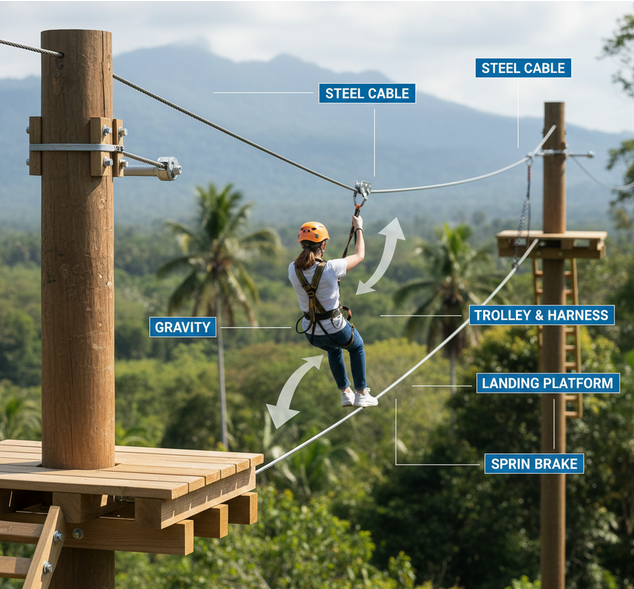
Ziplining has become a popular recreational activity worldwide, offering an unforgettable experience as one flies across the landscape. But how do zip lines work? The mechanics are interesting, combining physics and engineering. From the steel cable to the braking system that provides a smooth landing, each component is very important. This guide describes the working principle of a zip line, physics, safety, and the types of zip lines for your next zip line adventure.
What Is a Zipline?
A zip line is a recreational activity where an individual rides down a suspended steel cable from a high position to a low position, with gravity providing the driving force.
The Basics of Zipline Design
A zip line is made up of a cable made of steel between two points, which are of varying heights. The cable is tensioned to accommodate the maximum weight of riders. It uses gravity as the main source of power, and the rider is attached to the design via a pulley system and harness.
Key Components You’ll See on Every Zipline
All zip lines contain the necessary parts that work together. The backbone is made up of a steel cable. This cable is connected to a pulley system to enable easy movement. The rider is secured by the harness, and anchor points on both ends take considerable forces. Lastly, there is a braking mechanism that controls the speed and safe stop at the lowest point.
How Do Ziplines Work?
The way zip lines operate is understanding the journey and the forces that create the experience.
The Journey from Cable to Harness
In a zip line adventure, you are fitted by guides into a harness that is attached to a pulley. This pulley mechanism slides on the steel cable. After being released, you fall down the slope of the cable due to the force of gravity. The pulley system minimises friction, which enables one to travel easily between two points. When you get to the bottom, the braking system kicks in to slow down the momentum and bring you to a controlled halt.
How Gravity and Friction Power the Ride
A zip line is operated based on gravity and friction. The rider is drawn down the incline of the cable by gravity. The descent is slowed naturally by friction between the pulley system and cable, as well as air resistance. The cable angle determines speed – steeper cable angles create rides that have more speed, whereas more relaxed cable slopes create relaxing rides. Braking systems provide more control where needed.
The Physics Behind a Zipline
The thrilling feeling of a zip line adventure comes from the application of calculated physics.
Gravity, Tension, and Force
Zip lines are operated by three main forces: gravity, tension, and friction. The rider is pulled down by gravity, creating the forward movement. This force is countered by tension in the steel cable, which holds the cable taut. The cable should be able to withstand tension to carry the maximum weight, but should not hang too much at the bottom. These forces counterbalance to produce a safe and controlled descent.
How Weight and Angle Affect Speed
Speed depends on rider weight and cable angle. Heavier riders feel a greater gravitational pull, which may result in higher speeds, and air resistance is higher. The steepness of descent is dependent on the cable angle between two points – angles between 2-6 degrees are normal. The steeper the slope, the faster it can be, whereas the less steep slope will give slower and scenic rides.
The Role of Braking Systems
A braking system is a must to operate safely. These systems overcome the effects of gravity and momentum in order to have controlled stops. The braking systems in modern zip lines vary, with some systems employing friction brakes and others employing hydraulic systems. The braking system should be able to handle various weights and speeds, with the same stopping power. In the absence of proper braking, the lowest point may be dangerous in terms of collision, and the braking system is therefore essential in any zip line adventure.
| Component | Function | Safety Role |
| Steel Cable | Main support between two points | Supports maximum weight |
| Pulley System | Smooth travel along cable | Reduces friction, controls descent |
| Harness | Secures person riding | Prevents falls |
| Braking System | Controls speed and stops rider | Ensures safe landing |
How Does a Zipline Work Safely?
The most important thing in a zip line adventure is safety. Several systems are in place that guarantee each individual on the ride has the experience of a lifetime at no risk.
Safety Gear & Harnesses
Harnesses nowadays are evenly distributed in weight and have numerous points of attachment. Commercial practices use full-body harnesses. Helmets will save against hits, and gloves against rope burns. Every safety equipment is inspected regularly and meets industry requirements. Connections use certified carabiners that have locking systems.
Cables, Anchors, and Load Testing
The steel cable should be able to withstand far more than the maximum weight of the riders – usually, the safety factors are 3:1 or higher. Cables are inspected in terms of wear and tension loss. The anchor points are connected to structures that can hold more than what is expected of them. Periodic load testing ensures all parts have structural integrity and zip lines are safe.
Brake Types (Passive vs Active)
There are two types of braking mechanisms: passive and active. Passive brakes are based on gravity and friction. The cable angle is built so that it slows riders naturally at the lowest point. The active braking systems provide direct control to operators. Hydraulic, spring-loaded, and magnetic brakes give accurate braking force. A large number of recent zip line users use hybrid systems to ensure maximum safety.
Experience It Yourself: Malama Tours provides you with a zip line adventure in Coral Crater Adventure Park in Oahu with professionally maintained equipment and knowledgeable guides who will make sure that you are safe during this memorable adventure.
Types of Ziplines and Uses
Zip lines are designed in a wide variety of ways, lengths, and uses, both as a recreational activity and in extreme forms.
Adventure Parks & Eco‑Tours
The majority of people experience their first zip line adventure in adventure parks or eco-tour parks. These constructions are very friendly and scenic, and offer moderate speeds to beginners. Often, courses have several zip lines of different lengths. Eco-tours are more focused on environmental education, and the zip-lines are placed in order to display the rainforest canopies and landscapes. Such leisure activities are usually run at low angles and with powerful braking mechanisms.
Racing Ziplines & Extreme Configurations
Racing zip lines and extreme configurations for enthusiasts. The maximum lengths of zip line installations are more than a mile long, with a speed of more than 100 mph. Racing formats have parallel cables where two or more riders can compete at the same time. Extreme zip lines consist of steeper inclines and extreme rise and fall. These configurations have weight restrictions, and there are certain maximum weight limits that will ensure good performance of the pulley system and braking system at high speeds.
Recreational vs Professional Setups
Recreational zip lines are safer and accessible, and they are meant to be used by the public. They have reduced distances between two points, less acute angles, and wider training. Functionality is a priority in professional arrangements such as military training and rescue. Commercial zip line adventures strike a balance between the two strategies and provide professional-level safety with recreational activity and unforgettable experiences of all ages.
Conclusion
The concept of the operation of a zip line shows an engineering concept. Starting with the moment when you are being drawn off the platform by the force of gravity, to the moment when the braking system brings you to the ground at the lowest point, all the elements combine to provide an experience that you will never forget. The steel cable between two points, the pulley system that allows the movement to be smooth, and the calibrated braking mechanisms show that physics and safety can make thrilling adventures.
Frequently Asked Questions (FAQs)
Who can ride a zipline?
The majority of zip line parks have a rider age of 6 and above, with a weight limit of between 40 and 275 pounds. The braking system is properly functioning since there is a maximum weight limit. Health limitations can be imposed. Make sure you check the requirements before you book your zip line adventure.
What should I wear on a zipline?
Wear comfortable athletic outfits that are easy to move. Closed-toe shoes with a good grip are required. Long pants keep your legs out of harness straps. Tie long hair back and take off any loose items that may get in the way of the pulley system or braking.
How fast can a zipline go?
The speed depends on cable angle, length, and the weight of the rider. Zip lines used for recreational use usually travel 20-40 mph. Extreme configurations and longest zip line installations may go beyond 100 mph, where air resistance is considered important. Operators calculate angles and introduce proper braking systems to safe speeds.
How long is a typical zipline?
Common recreational zip lines range between 200 and 800 feet and are perfect for a beginner. Intermediate courses have lines that go up to 1,500 feet, and the longest zip line installations are over a mile long. The world has the longest zip line, which is more than 1.5 miles. Length is not necessarily equated to excitement, as there are shorter, steeper zip lines that can also be intense.
Do weather conditions affect zipline rides?
Yes, the weather does affect the work of zip line operations. Closures are caused by high winds, lightning, and heavy rain. The wet conditions influence the braking system’s functioning and increase air resistance. Cold temperatures lower the tension of cables. Weather is tracked by professional operators who delay the rides in case the conditions are unfavorable.