
FUN FACTS ABOUT HAWAII VOLCANOES NATIONAL PARK EVERY TRAVELER SHOULD KNOW
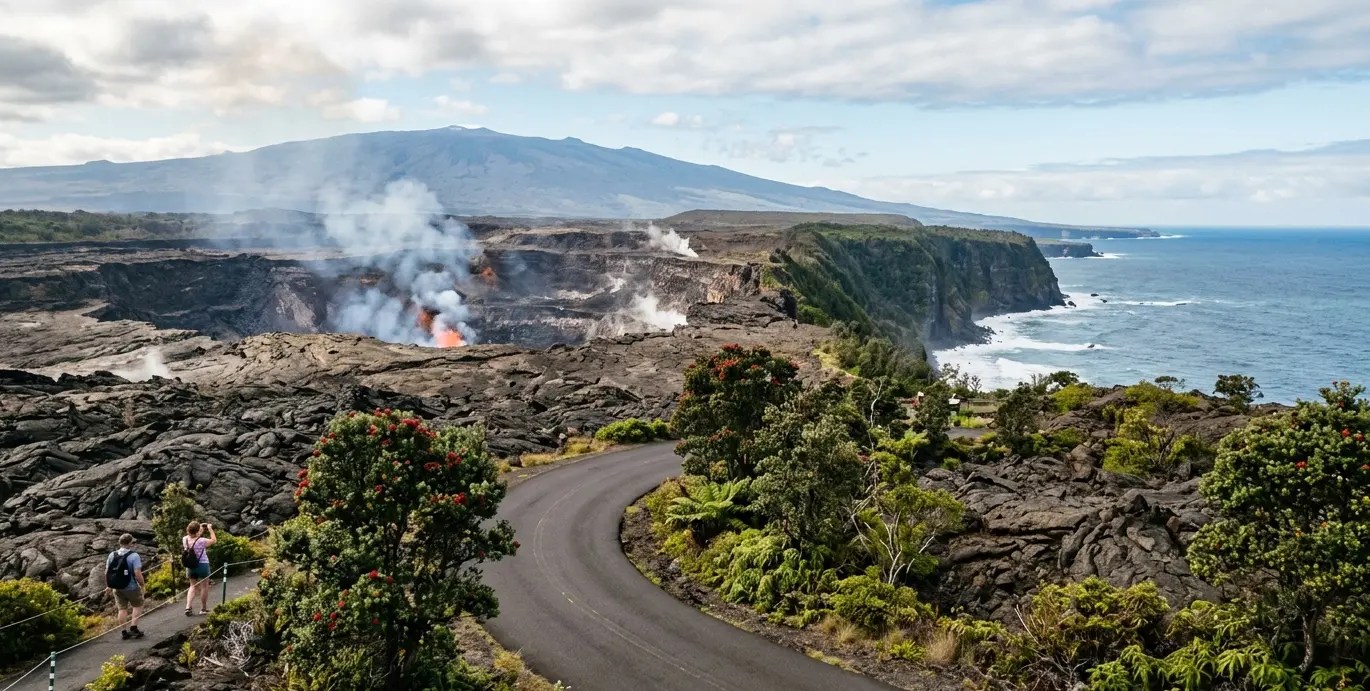
There are places you visit that make you feel alive. Hawaii Volcanoes National Park is one such place. It’s not just another must-visit destination in the Hawaiian Islands. It’s a breathtakingly beautiful landscape where you can watch the earth reshaping itself in real time.
Most travelers come here for the scenic views. But what they actually leave with is a bunch of adventure stories, like walking along ancient lava paths, spotting rare species, and watching glowing horizons at sunset.
At Hawaii Volcanoes National Park, you don’t just see nature’s raw beauty. You get to feel it—live it. The warm ground beneath your feet and the quiet rumble of active volcanoes nearby are something you will never forget, even years after your trip. So, before you pack bags for your Hawaiian vacation, take some time to learn a bit about this volcanic wonderland.
Overview of Hawaii Volcanoes National Park
Protected by the National Park Service, Hawaii Volcanoes National Park is one of the most extraordinary places on the southeastern side of the Big Island. Established in 1916, this UNESCO World Heritage Site spans a vast terrain shaped by fire and time.
Although the park was once called Hawaii National Park, its defining feature—molten earth meeting lush rainforests—has earned its global recognition as an International Biosphere Reserve, drawing nature lovers and geology enthusiasts from all over the world.
What Makes Hawaii Volcanoes National Park Unique
What sets Hawaii Volcanoes National Park apart from other national parks is its constant change of state. The landscape is not static. It’s constantly growing, cracking, and transforming with frequent volcanic eruptions. There are only a handful of places where you can actually witness such raw geological activity from so close.
You can simply drive along Crater Rim Drive, take a long hike along the hardened lava flows, or visit the Volcano Art Center to explore something unique and unexpected built from constant destruction and renewal.
Location and Geographic Significance
Located on Hawaii Island at 1 Crater Rim Drive, this park stands on a volcanic hotspot and features two of the most active volcanoes on Earth: Kīlauea and Mauna Loa. It’s home to iconic shield volcano structures and stretches from sea level to over 13,000 feet, continuing to expand through basaltic lava flows.
Simply put, the park’s position on the Big Island is significant in understanding the formation of the Hawaiian Islands.
Brief History of the National Park
In 1916, the US National Park Service was formed with a unified vision to protect landscapes. Hawaii National Park, established that same year, marked a pivotal moment for the Hawaiian Islands.
In its early days, the park included three famous volcanoes: Mauna Loa, Kilauea, and Haleakala on Maui. However, with time, Haleakala branched off to become its own national park to preserve the landscapes. What remains is Hawaii Volcanoes National Park, an active volcanic land that has been a place of cultural and geological significance. The place continues to draw thousands of visitors each year, eager to witness the unfathomable beauty of active volcanoes and a constantly changing land.
Fun Facts About Hawaii Volcanoes National Park
There is more than one reason travelers visit the crowd-favorite Hawaii Volcanoes National Park. Along with dramatic landscapes, you will find many fascinating details that will make the trip feel like a discovery trail. Here are a few unforgettable highlights that you absolutely shouldn’t miss.
Walk Through Lava Tubes Formed by Ancient Eruptions
One of the surreal experiences in this park is stepping inside the Thurston Lava Tube (Nāhuku). 2,000°F lava formed the 500-yard-long tunnel about 500 years ago, when the lava cooled on the outside but continued to move within. Walking through these dimly lit, cave-like, echoing lava tubes simply feels like entering a quiet, mysterious world, shaped by ancient fire.
Spot Rare and Endangered Species in Their Natural Habitat
Although the park is rugged terrain, it’s the natural habitat for endemic and endangered birds, mammals, and plants. It is home to the Hawaiian hoary bat, nesting Newell’s shearwaters, the Hawaiian petrel, the Hawaiian goose, humpback whales, and rare native trees. Keep an eye out for native birds and animals to witness how life thrives even in the harshest conditions.
Witness Nighttime Lava Glow and Fiery Landscapes
If you want to truly see the power of active volcanoes, stay after sunset when conditions allow. The glow from molten rock lights up the horizon, creating a jaw-dropping view and marking it as a memorable moment of your Hawaiian trip.
Explore Multiple Climate Zones in One Park
Hawaii Volcanoes National Park offers visitors a dramatic landscape where they can experience multiple climate zones in just a single day. You can simply move from lush, wet rainforests to arid, volcanic deserts and even chilly subalpine zones, allowing you to experience diversity in a compact space.
Attend Ranger-Led Programs and Interactive Tours
Programs and tours that include park rangers bring the park to life with engaging scientific stories, local myths, and cultural insights. The guided walks and talks covering the park’s geology and culture make the experience even more thrilling and meaningful.
Hike Trails with Dramatic Volcanic Scenery
Trails like the Crater Rim Trail and Devastation Trail are popular among visitors for dramatic views of hardened lava, massive craters, and a steaming lava lake. The 3.3-mile Kīlauea Iki Trail (a frozen lava lake), the 1.2-mile Sulphur Banks (geothermal activity), and the Devastation Trail (cinder fields) make each step feel like walking through history.
Photograph Unique Geological Formations and Steam Vents
From the rugged textures of cooled lava to the mystical beauty of the sulfur banks, Hawaii Volcanoes National Park is a dream destination for photography enthusiasts. Steam vents, solidified lava lakes, Halemaʻumaʻu Crater Overlooks, Hōlei Sea Arch, Chain of Craters Road, and Thurston Lava Tube, surrounded by lush rainforests, are the best spots for legendary shots.
Volcanoes Inside Hawaii Volcanoes National Park
At the heart of Hawaii Volcanoes National Park lies its true power—the volcanoes themselves. These giants shape everything around the Hawaiian Islands, from the land to the atmosphere. Let’s look at the two primary forces that shape this stunning landscape.
Kīlauea: One of the Most Active Volcanoes on Earth
As the centerpiece of the park, Kīlauea is among the most active volcanoes on the planet, popularly known for its frequent eruptions and flowing lava. Visitors typically begin their journey from the Kīlauea Visitor Center, where they can learn about different conditions and safe viewing areas. The historic Volcano House is another tourist attraction for stunning views of the crater.
Mauna Loa: The Largest Volcano in the World
Mauna Loa is the largest volcano on Earth, a classic shield volcano. Although its eruptions are usually less explosive, they are incredibly expansive, and lava can travel great distances. This slow, steady flow of lava over the centuries has played a pivotal role in shaping the vast landscape of the Big Island.
How Volcanic Activity Shapes the Park
Everything in Hawaii Volcanoes National Park is shaped by the flow of molten lava. Molten lava flows form new land while reshaping old land. Whether it’s the fresh lava flows or shifting terrain, this national park is constantly changing. And by visiting this site, you will get the rare chance to witness how the creation takes place right before your own eyes.
Even when your journey ends, it is not just another destination you check off your places-to-visit list. Instead, it’s a rich experience that will stay with you for the rest of your life. So, to make the most of your time in Hawaii Volcanoes National Park, choose Malama Tours for expert-led journeys. From seamlessly navigating the park entrance to uncovering hidden details, lesser-taken trails, and safe access to key areas, our guided tours can help you experience the park in more fulfilling ways.
Frequently Asked Questions (FAQs)
What Is the Best Time to Visit Hawaii Volcanoes National Park?
Even though Hawaii Volcanoes National Park is open year-round, the best time to visit is during the dry seasons of spring (April-May) and fall (September-October).
Are There Active Volcanoes I Can Safely Visit in the Park?
Yes, there are active volcanoes in the park that you can safely view from designated areas. Check with the Kīlauea Visitor Center for details and follow the guidelines set by the National Park Service.
Can Visitors Explore Lava Tubes at Hawaii Volcanoes National Park?
Absolutely! The Thurston Lava Tube is one of the most significant tourist attractions in the park, where visitors can take slow walks through the naturally formed lava tubes.
What Types of Wildlife Can I See in the Park?
You may spot native birds and unique species, including the Hawaiian hoary bat, nesting Newell’s shearwaters, the Hawaiian petrel, the Hawaiian goose, and humpback whales.
Is Photography Allowed in Hawaii Volcanoes National Park?
Yes, photography is allowed in the park. From steaming vents to scenic landscapes, there’s a lot of natural beauty to capture with your camera in the park.